
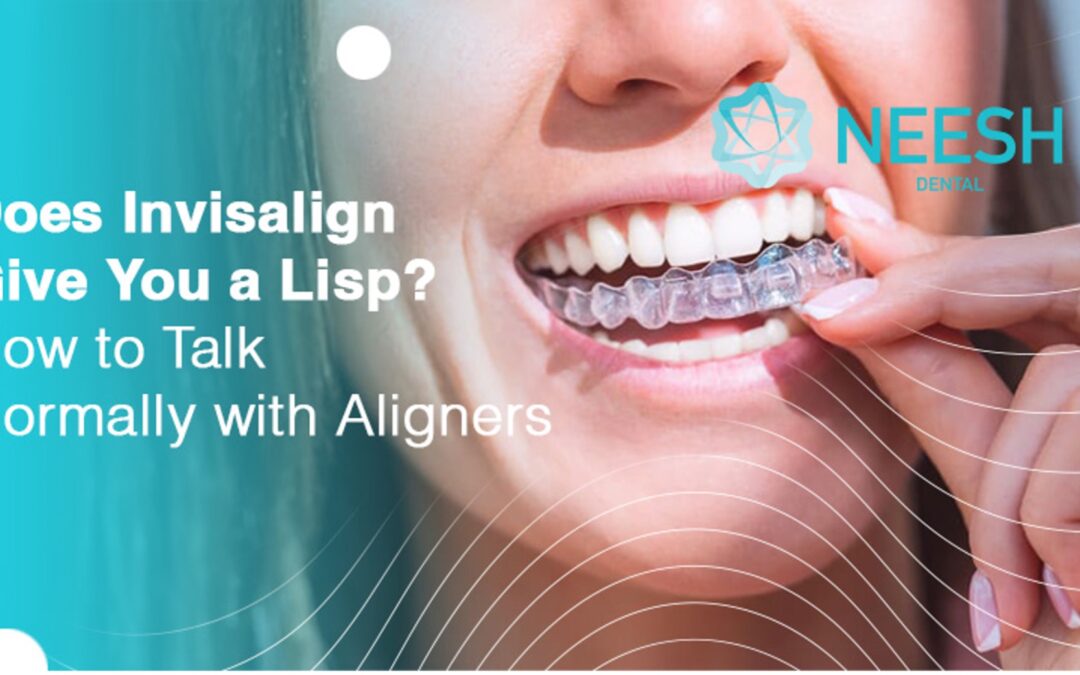
One of the things some patients notice when they first start wearing Invisalign is that they sound a little different. You put the clear aligners in and suddenly your “S” sounds a little lispy, or certain words just don’t come out quite the way you’re used to. The good news is that this temporary speech impediment usually doesn’t last very long. There is something new in your mouth, your tongue has to figure out where to go, and most people adjust pretty quickly.
Why Does Invisalign Affect the Way You Talk?
Speaking is actually a fairly precise physiological process. Your tongue has spent years learning exactly where to touch your teeth and the roof of your mouth to make different sounds. When you put an aligner over your teeth, you have added a thin layer of medical-grade plastic that wasn’t there before. It doesn’t seem like much, but your highly sensitive tongue notices it immediately.
Sounds such as “S,” “Z,” “SH” and sometimes “TH” can be particularly noticeable at the beginning, leading to a mild Invisalign lisp. I usually tell patients that they may sound a little lispy at first, but it doesn’t take very long to get used to it. Within the first week, muscle memory typically adapts and most people have pretty much figured it out.
The Best Way to Get Used to Talking With Invisalign
The simple answer is to talk. The more you wear the aligners and speak with them in, the sooner your mouth learns to accommodate them. If there is a particular word or sound that bothers you, say it out loud a few times. To speed up the adjustment process, you can try reading a book out loud or even singing along to music when you are alone. Singing requires exaggerated mouth movements, which helps train your tongue and jaw to adapt more quickly.
Speech therapists also use specific texts, such as the “Rainbow Passage,” to help with pronunciation. You can practice reading this out loud: “When the sunlight strikes raindrops in the air, they act as a prism and form a rainbow. The rainbow is a division of white light into many beautiful colors.” Focusing on your “S” and “TH” sounds during these exercises provides your tongue with the exact practice it needs.
What I generally don’t recommend is getting into the habit of taking the aligners in and out every time you need to talk, meet someone, or go somewhere. Part of making orthodontic treatment work is integrating the aligners into your normal life as quickly as possible. The more consistently you wear them, the better they can do what they are supposed to do, and the less you are constantly adjusting back and forth.
What About Invisalign Attachments?
Invisalign attachments can add to the adjustment period, although I wouldn’t say they are usually the main reason for a lisp. Attachments are the small tooth-coloured shapes that we sometimes bond onto the teeth to help the aligners produce particular movements.
In the beginning, they may feel strange and can occasionally rub against the lips or cheeks. Keep in mind that you are also getting used to putting the aligners in, taking them out, eating differently, and cleaning around everything. So sometimes it isn’t one particular thing that bothers you; you are simply adapting to several new things at the same time. That overall adjustment usually gets considerably easier over the first few weeks.
Should You Take Invisalign Out for an Important Meeting or Presentation?
The more consistently you wear your aligners, the better they work. In general, I encourage patients to get comfortable speaking with them rather than routinely removing them whenever they have something important to do. But clear aligner therapy also has to fit into your life.
If you have an unusually important presentation, event, or situation and you are much more comfortable taking them out briefly, you can make that clinical decision. What matters more is the overall pattern of wear. You don’t want occasional removal to gradually become several hours every day, which could compromise your treatment progress.
How Long Does an Invisalign Lisp Last?
For the vast majority of patients, the change in speech is temporary and becomes much less noticeable as the tongue adjusts to the aligners. Many people notice a significant improvement within the first week, although the adjustment period varies from person to person depending on their oral anatomy.
At first, you may notice every little difference because you’re listening for it. Then your tongue adjusts, you stop thinking about the aligners when you speak, and eventually you may have trouble remembering what bothered you in the first place.
When Should You Contact Your Dentist?
A temporary change in speech is usually nothing to be concerned about when you first start wearing Invisalign. However, if you continue to have significant difficulty speaking after you have had time to adjust, or if an aligner is rubbing or irritating your tongue, lips, or cheeks, it is worth contacting your dentist.
Sometimes a small adjustment to the aligner or simply checking that it fits correctly can make a significant difference in comfort. If you are also noticing that your aligners do not fit as they should, or you have questions about how to clean your Invisalign correctly, your dental team can help.
Frequently Asked Questions (FAQs)
Will my lisp go away after wearing Invisalign for a few days?
For most patients, the lisp is temporary and improves as the tongue adjusts to the extra layer of plastic. Many people notice a significant improvement within the first week, although the adjustment period can vary based on individual anatomy and speech habits.
How can I get rid of an Invisalign lisp faster?
The simplest approach is to keep wearing your aligners as directed and practice speaking with them in. Reading aloud, singing in the car, and repeating words or sounds that feel difficult (like the Rainbow Passage) can help your tongue get used to the new shape in your mouth faster.
Can I take my aligners out for an important presentation?
Invisalign is removable, so there may be situations where taking your aligners out briefly makes sense. However, removing them regularly whenever you need to speak can make it harder to get used to speaking with them and may reduce your overall wear time. If you have a critical event during the early part of treatment, discuss your options with your dentist.
Do Invisalign attachments affect my speech?
Attachments can feel strange when you first get them, but they sit on the outside of the teeth and are not usually the main reason for an Invisalign lisp. The aligner itself is more likely to affect the way your tongue moves and produces certain sounds. Most patients become accustomed to both the attachments and aligners within a few weeks.
What if I still have a lisp after a few weeks?
If your speech has not become more comfortable after several weeks, or if you are having difficulty because an aligner feels uncomfortable or is irritating your mouth, contact your dental team. They can check the fit of the aligners and make sure there is no rough edge or other issue contributing to the problem.
Worried About Speaking With Invisalign?
If you’re considering Invisalign but are worried about speaking with the aligners, I wouldn’t consider that a major reason not to proceed. There is usually a short adjustment period. Your tongue learns where everything is, your speech becomes more natural, and eventually you stop thinking about the aligners when you talk.
If you have questions about orthodontic options or would like to know whether Invisalign might be a good fit for you, we would be happy to have a look. Book a consultation at NEESH Dental in Saskatoon today to discuss your treatment plan.